





Introduction
QR codes have become an essential part of modern business — from restaurant menus and product packaging to digital business cards and marketing campaigns. But before you generate your first QR code, there’s one important decision every business owner must make: should you use a static QR code or a dynamic QR code?
At first glance, both look identical — a simple black-and-white (or custom-branded) square pattern that a smartphone camera can scan. But under the hood, they work very differently, and choosing the wrong type can cost you money, flexibility, and valuable customer data.
In this guide, we’ll break down exactly what static and dynamic QR codes are, how they differ, their pros and cons, and which one is the right fit for your business needs.
What Is a Static QR Code?
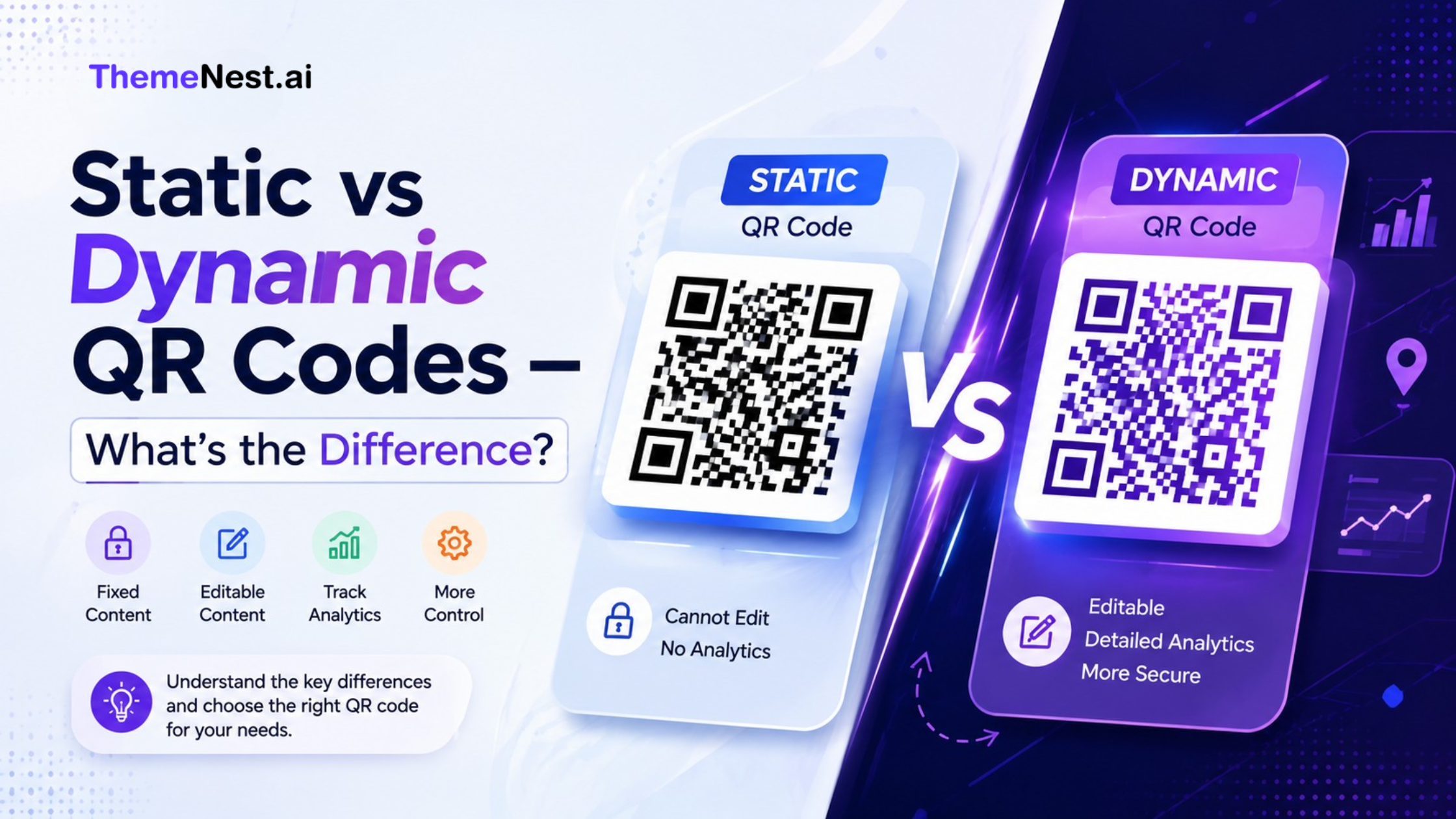
A static QR code stores information directly within the code itself. Once generated, the data — whether it’s a URL, text, Wi-Fi password, or contact details — is permanently embedded and cannot be changed.
If you ever need to update the destination link or content, you’ll have to create a brand-new QR code and reprint it everywhere it was used.
Key Characteristics of Static QR Codes
- Fixed data – The information is locked in at creation and cannot be edited.
- No expiry – Static QR codes work indefinitely, as they don’t rely on external servers.
- No tracking – They typically don’t offer scan analytics like location, device type, or scan time.
- Free or low-cost – Since there’s no ongoing management required, static QR codes are usually cheaper or free to generate.
- Best for one-time or permanent use – Ideal for content that will never change.
Common Use Cases for Static QR Codes
- Wi-Fi network sharing at home or a small office
- Printed business cards with fixed contact details
- Product packaging with permanent manufacturer information
- One-time event materials (like invitations) that don’t need updates
- Simple plain-text messages or static links that won’t change
What Is a Dynamic QR Code?
A dynamic QR code doesn’t store the actual destination content directly. Instead, it contains a short redirect URL that points to a server, which then forwards the user to the actual destination. Because the redirect is managed on the server side, you can change the destination link anytime — without changing the printed QR code itself.
This makes dynamic QR codes far more flexible and business-friendly, especially for marketing and operations.
Key Characteristics of Dynamic QR Codes
- Editable content – Update the link, file, or destination anytime, even after printing.
- Scan analytics – Track scans by location, device, time, and browser to measure real performance.
- Password protection & expiry dates – Add security layers for sensitive campaigns.
- Shorter, cleaner codes – Since the redirect URL is short, the QR pattern is often simpler and easier to scan.
- Requires a subscription or platform – Dynamic QR codes typically depend on a QR management platform to stay active.
Common Use Cases for Dynamic QR Codes
- Restaurant menus that change seasonally or daily
- Marketing campaigns where you need to A/B test different landing pages
- Event registrations with real-time attendee tracking
- Digital business cards that need frequent contact updates
- Retail promotions and coupons with expiry dates
- Product packaging that connects to updatable content (manuals, videos, offers)
Static vs Dynamic QR Codes: A Side-by-Side Comparison
| Feature | Static QR Code | Dynamic QR Code |
| Editable after creation | No | Yes |
| Scan analytics/tracking | No | Yes |
| Requires internet/server | No | Yes |
| Password/expiry protection | No | Yes |
| Cost | Usually free | Often subscription-based |
| Best for | Permanent, one-time content | Marketing, campaigns, evolving content |
| Reprinting needed for changes | Yes | No |
Which One Should You Choose?
The right choice depends entirely on how your content will be used and whether you need performance insights.
Choose a Static QR Code If:
- Your content will never change (e.g., a fixed Wi-Fi password or permanent contact card)
- You don’t need to track how many people scanned it
- You want a free, simple solution without ongoing costs
- You’re creating a one-time-use QR code for a personal project
Choose a Dynamic QR Code If:
- You run marketing campaigns and need to measure ROI through scan analytics
- Your content (menus, offers, links) changes frequently
- You want to protect sensitive content with passwords or set an expiry date
- You’re building a business that relies on QR codes at scale, such as restaurants, retail chains, agencies, or event organizers
- You want the flexibility to fix broken links without reprinting materials
For most growing businesses, startups, and agencies, dynamic QR codes are the smarter long-term investment. The ability to update content instantly and access real-time analytics far outweighs the small added cost — especially when QR codes are tied to time-sensitive campaigns or physical print materials that are expensive to replace.
Why Businesses Are Moving Toward Dynamic QR Code Platforms
As QR codes become central to omnichannel marketing, more businesses are shifting from basic static generators to full-featured QR code management platforms. These platforms combine dynamic QR generation with dashboards, analytics, team collaboration, and branding — turning a simple QR code into a measurable marketing asset.
Platforms like QRBuilder are built exactly for this shift. QRBuilder supports both static and dynamic QR codes, giving businesses the flexibility to choose the right type for each use case — all from a single dashboard. With features like real-time scan analytics, custom branding, bulk QR generation, secure password-protected codes, and API integration, it removes the guesswork and lets businesses launch professional QR campaigns without building anything from scratch.
Whether you’re a restaurant updating your menu weekly, a marketing agency running client campaigns, or a startup building a QR-based service, having both static and dynamic options — with analytics baked in — gives you the flexibility to scale as your needs grow.
Final Thoughts
Both static and dynamic QR codes serve important purposes — the right one depends on your specific use case. If your content is permanent and you don’t need tracking, a static QR code gets the job done for free. But if you’re running a business that depends on flexibility, analytics, and campaign performance, a dynamic QR code is the clear winner.
For businesses looking to manage both types seamlessly — with branding, analytics, and security built in — a platform like QRBuilder offers a ready-to-launch solution that scales with your needs, whether you’re just getting started or managing QR codes across an entire organization.
Frequently Asked Questions
1: Can a static QR code be converted into a dynamic one?
No. Since static QR codes have the data embedded directly, they cannot be converted. You’ll need to generate a new dynamic QR code and replace the old one.
2: Do dynamic QR codes expire?
Dynamic QR codes don’t expire on their own, but the platform managing the redirect must remain active. Some platforms also let you set a custom expiry date for added control.
3: Are dynamic QR codes more expensive than static ones?
Generally, yes. Static QR codes are often free since there’s no backend management involved, while dynamic QR codes usually require a subscription to a QR management platform due to the analytics and redirect infrastructure involved.
4: Which type of QR code is better for restaurant menus?
Dynamic QR codes are strongly recommended for restaurant menus, since prices, dishes, and offers often change — and a dynamic code lets you update the menu without reprinting table cards.
5: Can I track how many people scanned a static QR code?
No, static QR codes don’t support scan tracking. If analytics matter to your business, a dynamic QR code is the better choice.