


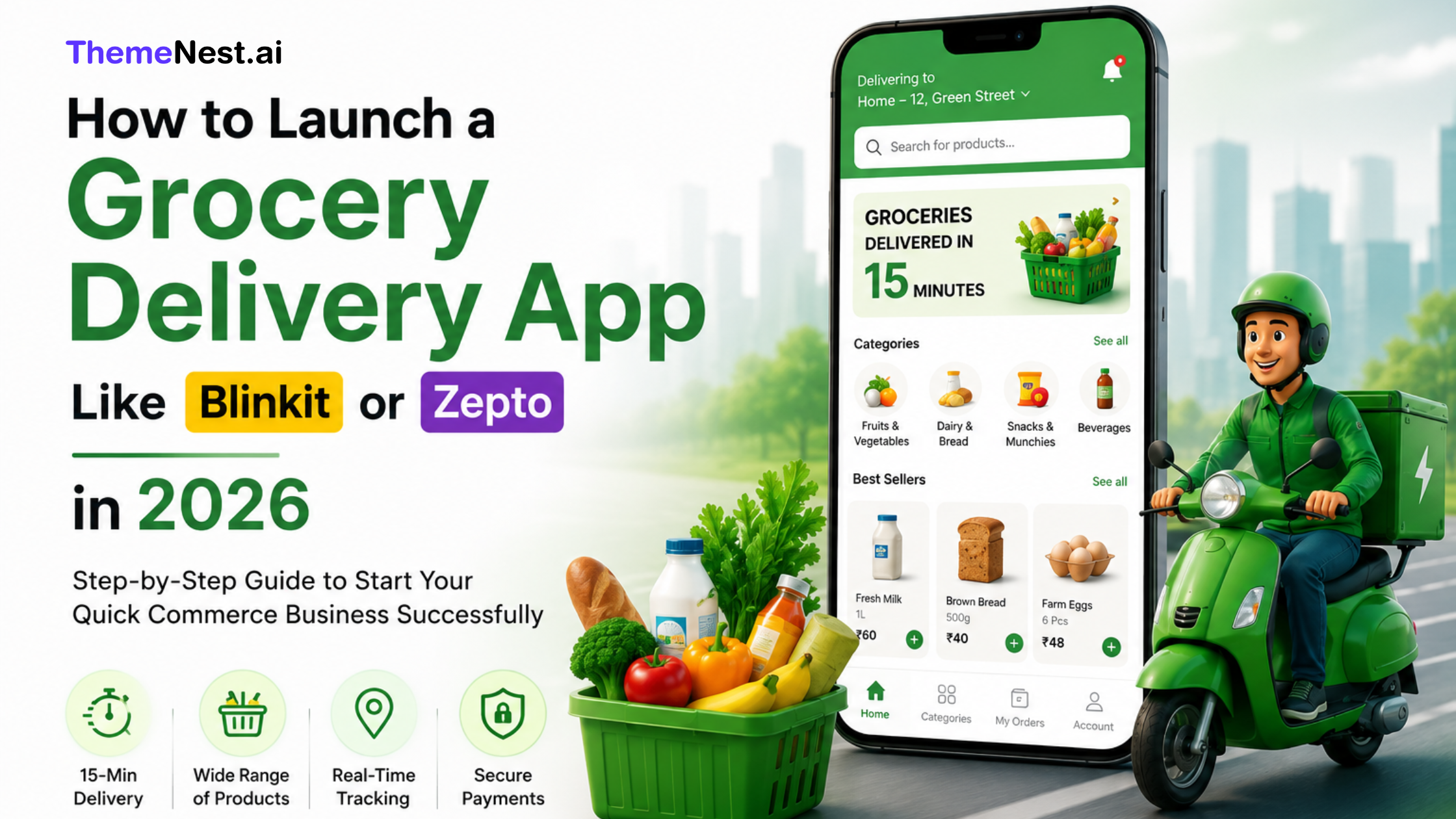
The grocery delivery industry has transformed dramatically over the last few years. What once took days now takes minutes. Consumers today expect milk, vegetables, snacks, medicines, and daily essentials to arrive at their doorstep within 10 to 30 minutes of placing an order.
This shift has fueled the rapid growth of quick commerce platforms such as Blinkit, Zepto, and Instamart. As customer demand continues to increase, entrepreneurs and local business owners are exploring opportunities to launch their own grocery delivery apps and capture a share of this growing market. The good news is that you no longer need a massive budget or a large development team to enter the quick commerce industry. With the right strategy and technology, launching a grocery delivery platform is more accessible than ever.
In this guide, we’ll explore how grocery delivery apps work, what features you need, business models to consider, and the fastest way to launch your own grocery delivery app in 2026.
Understanding the Quick Commerce Model
Quick commerce (Q-Commerce) focuses on delivering products within minutes rather than hours or days.
Unlike traditional eCommerce stores that ship products from centralized warehouses, quick commerce businesses use local fulfillment centers or nearby retail partners to reduce delivery time.
The success of companies like Blinkit and Zepto is built on three key factors:
1. Hyperlocal Inventory Management
Products are stored close to customers through dark stores, mini warehouses, or local partner stores. This significantly reduces delivery distance and enables faster fulfillment.
2. Smart Delivery Assignment
Orders are automatically assigned to the nearest available delivery executive, helping businesses reduce delivery time and improve operational efficiency.
3. Real-Time Customer Experience
Customers can browse products, check live stock availability, place orders, make payments, and track deliveries in real time through a seamless mobile experience.
The combination of these elements creates the fast and convenient experience modern customers expect.
Why Building from Scratch Isn’t Always the Best Option
Many entrepreneurs assume they need a completely custom-built application to compete in the market.
In reality, developing a grocery delivery platform from scratch can be expensive and time-consuming.
Typical challenges include:
- High development costs
- Long development timelines
- Ongoing maintenance expenses
- Continuous bug fixing and updates
- Additional costs for new features
A custom grocery delivery app can cost anywhere from $25,000 to $150,000+, depending on complexity and features.
Development timelines often range from 3 to 6 months before the first version is ready for testing. For new businesses, this creates unnecessary risk.
That’s why many startups and local businesses choose ready-made grocery delivery solutions that provide all core features out of the box.
What Is a Ready-Made Grocery Delivery Solution?
A ready-made grocery delivery platform is a pre-built software solution that already includes the essential functionality required to run a grocery delivery business.
Instead of spending months building technology, you can focus on:
- Branding
- Product catalog setup
- Delivery operations
- Customer acquisition
- Business growth
The platform is customized with your brand identity, logo, colors, and products, allowing you to launch significantly faster and at a much lower cost.
Essential Features Every Grocery Delivery App Needs
Whether you choose a custom solution or a ready-made platform, these features are critical for success.
Customer App Features
Customers expect a smooth and convenient ordering experience.
Key features include:
- Product search and filtering
- Category-based browsing
- Real-time inventory visibility
- Secure online payments
- Saved addresses
- Order history
- Wishlist functionality
- Live order tracking
- Push notifications
- Easy reordering
Delivery Partner App Features
Efficient delivery operations are essential for quick commerce.
Important features include:
- Order assignment
- Route navigation
- Order status updates
- Earnings tracking
- Delivery history
- Availability management
- Proof of delivery
Admin Dashboard Features
Business owners need complete control over operations.
Essential dashboard features include:
- Product management
- Inventory control
- Order monitoring
- Delivery management
- Customer management
- Promotional campaigns
- Coupon creation
- Sales reporting
- Revenue analytics
- Performance tracking
Backend Integrations
A scalable grocery delivery platform should also support:
- Payment gateway integration
- SMS notifications
- Push notifications
- Email alerts
- Location tracking
- Analytics tools
- Tax and invoice management
Choosing the Right Business Model
Before launching your app, you must determine how your business will operate.
Inventory-Based Model
In this model, you purchase and store products yourself.
Benefits:
- Better profit margins
- Full control over inventory
- Better quality management
- Faster delivery operations
Challenges:
- Higher investment
- Inventory management responsibilities
- Storage requirements
Marketplace Model
Instead of holding inventory, you partner with local grocery stores.
Benefits:
- Lower startup cost
- Reduced inventory risk
- Faster expansion
Challenges:
- Dependence on partner stores
- Inventory synchronization issues
- Less pricing control
Hyperlocal Model
This is often the best approach for new businesses.
You focus on a specific neighborhood or delivery zone and provide exceptional service before expanding.
Benefits:
- Faster deliveries
- Lower operational complexity
- Easier customer acquisition
- Better delivery efficiency
Many successful grocery startups begin with a hyperlocal strategy before scaling city-wide.
Step-by-Step Process to Launch Your Grocery Delivery App
Step 1: Define Your Delivery Area
Choose a manageable service area where deliveries can consistently be completed within 15–30 minutes.
Avoid expanding too quickly.
Step 2: Select Your Business Model
Decide whether you’ll manage your own inventory, partner with stores, or combine both approaches.
Step 3: Set Up Your Platform
Configure your:
- Brand identity
- Product catalog
- Pricing
- Categories
- Delivery zones
- Taxes and fees
Step 4: Enable Payments and Notifications
Integrate secure payment gateways and customer communication systems.
Customers should receive updates throughout the order journey.
Step 5: Build Your Delivery Team
Train delivery personnel on:
- Order handling
- Route optimization
- Customer service
- Mobile app usage
Step 6: Test Before Launch
Conduct a soft launch with a limited number of orders.
Testing helps identify:
- Checkout issues
- Inventory problems
- Delivery bottlenecks
- User experience improvements
Step 7: Promote Locally
Focus on hyperlocal marketing strategies such as:
- Google Business Profile optimization
- Local Facebook groups
- Instagram advertising
- WhatsApp marketing
- Referral programs
- Launch offers and discounts
Acquiring your first 100 customers should be your primary goal.
Why Ready-Made Solutions Are Winning in 2026
The biggest advantage of a ready-made grocery delivery platform is speed.
Instead of spending months building software, businesses can:
- Launch faster
- Reduce upfront costs
- Test the market quickly
- Generate revenue sooner
- Scale based on real customer feedback
This lean approach reduces risk while increasing the chances of long-term success.
Launch Your Grocery Delivery Business with FreshMart
If you’re planning to launch a grocery delivery app similar to Blinkit or Zepto, starting with a proven platform can save significant time and money.
FreshMart by ThemeNest.ai is a complete grocery delivery solution designed for entrepreneurs, local grocery businesses, supermarkets, and quick commerce startups.
With built-in customer apps, delivery partner apps, real-time tracking, inventory management, payment integration, and an advanced admin dashboard, FreshMart provides everything needed to launch and scale a modern grocery delivery business.
Instead of spending months on development, you can focus on growing your customer base and building a successful brand.
Frequently Asked Questions
1.How much does it cost to build a grocery delivery app like Blinkit?
A custom-built solution can cost anywhere between $25,000 and $150,000 or more. Ready-made platforms are significantly more affordable because the core technology is already developed.
2.How long does it take to launch?
Custom development can take 3 to 6 months or longer. A ready-made platform can often be launched within days or weeks.
3.Do I need a warehouse to start?
No. Many businesses begin by partnering with local stores and operating a marketplace model before investing in their own inventory.
4.Can a ready-made app support fast delivery?
Yes. Delivery speed depends largely on inventory location, delivery operations, and route management rather than whether the software is custom-built or ready-made.
5.Is the grocery delivery business profitable in 2026?
Yes. Demand for convenience continues to grow, making grocery delivery one of the fastest-growing sectors in local commerce. Businesses that focus on efficient operations and customer satisfaction can build highly profitable models.